
The KitchenAid Story: Battleships, Art Deco, and the Mixer That Never Really Changed
We take these machines apart every week, so forgive us a little enthusiasm: the stand mixer on your counter has one of the best origin stories in American manufacturing. Here it is, from Hobart to now.
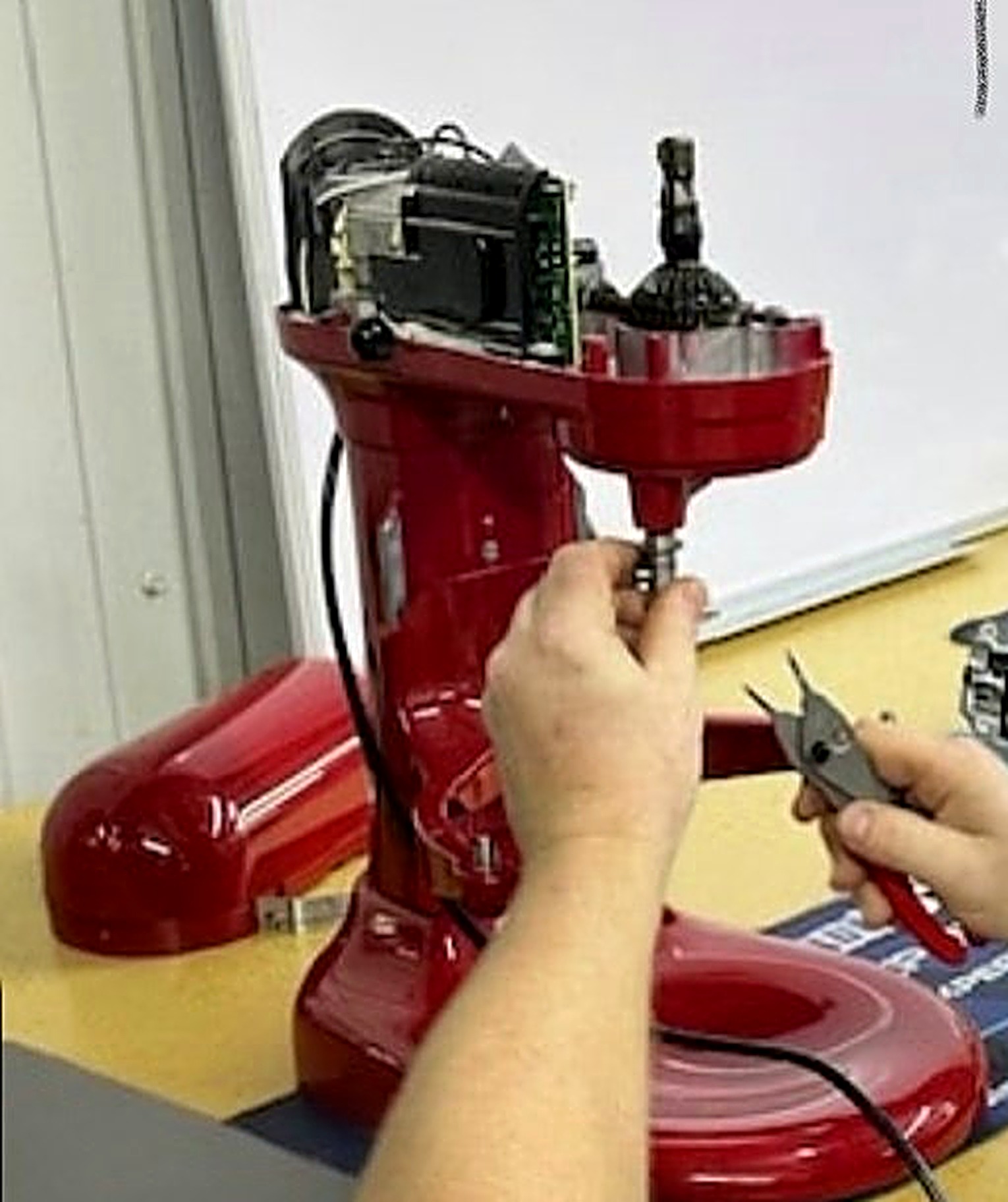
It started with an iron spoon
The Hobart Manufacturing Company of Troy, Ohio, made electric motors and commercial food equipment. In 1908, Hobart engineer Herbert Johnston watched a baker mixing dough by hand with a heavy iron spoon and decided to mechanize the job. Hobart’s answer, in 1914, was the Model H — an 80-quart stand mixer built for professional bakeries. It is the direct ancestor of every KitchenAid ever made.
The machine proved itself fast. In 1917, the U.S. Navy put Hobart mixers aboard the battleships California, Tennessee, and South Carolina — and then made them standard equipment on every ship in the fleet. If a mixer could survive a battleship galley, a home kitchen would be no problem.
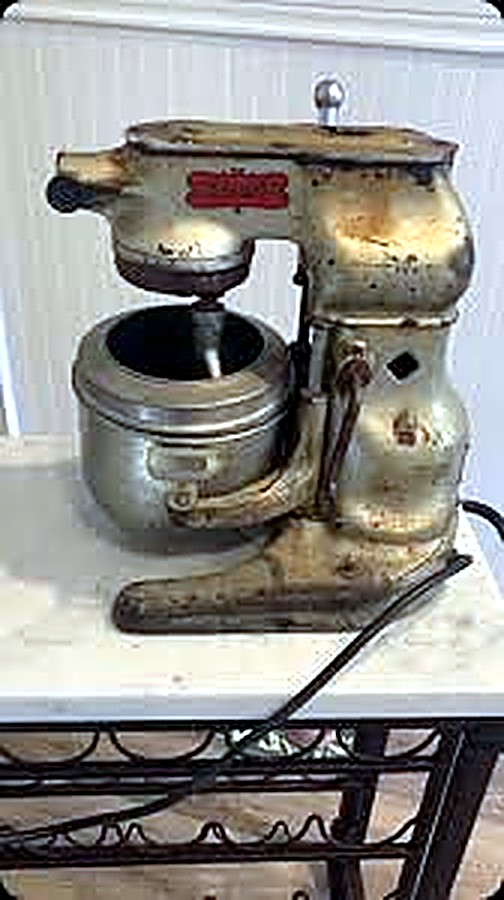
“The best kitchen aid I’ve ever had”
In 1918, Johnston patented his mixing machine, and Hobart built a smaller 10-quart model, the C-10 — the first machine to carry the KitchenAid name. The story Hobart told for a century is that executives took prototypes home, and one wife said, “I don’t care what you call it — it’s the best kitchen aid I’ve ever had.” Historians will note the anecdote can’t be proven. It’s too good a line to fact-check to death, and KitchenAid has counted 1919 as its birth year ever since.
Those first home mixers were serious machines: the early-1920s home models weighed about 65 pounds, stood over two feet tall, cost as much as a good used car, and were sold largely door-to-door — by a mostly female sales force — because appliance stores wouldn’t stock them. In 1924, Hobart renamed the division the KitchenAid Manufacturing Company. The smaller, lighter Model G of the late 1920s was the first real hit, selling some 20,000 mixers in three years.
1937: the shape you know
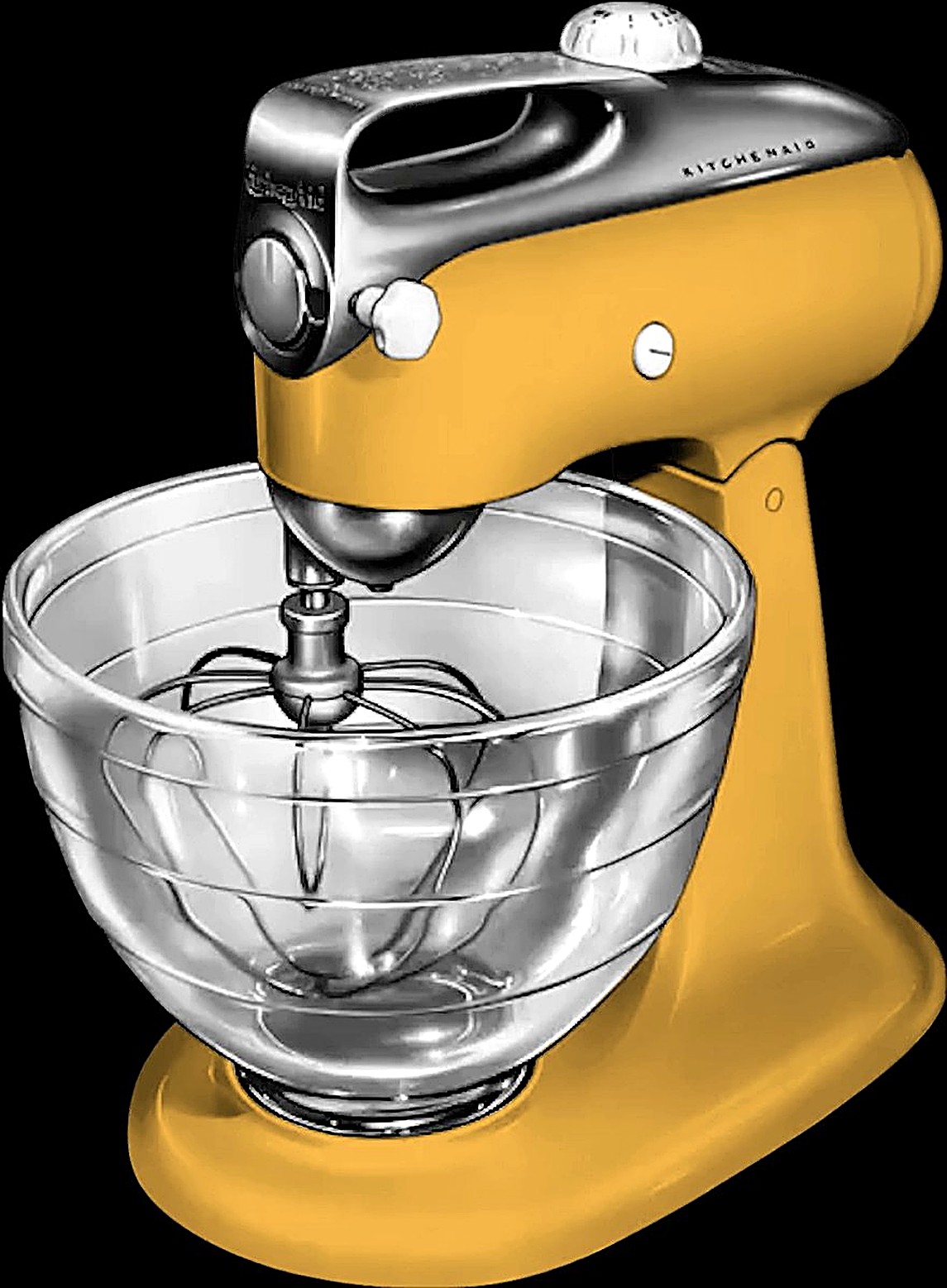
In 1937, Hobart brought in industrial designer Egmont Arens, and the Model K got the streamlined silhouette every KitchenAid still wears today: the rounded head, the bowl that locks into the base, and the attachment hub in the nose. It sold for $55. The shape was later registered as a trademark, the San Francisco Museum of Modern Art named the stand mixer an icon of American design — and in the detail that matters most to owners, attachments made for that 1937 hub still fit the mixer you bought last year.
Around 1941, the K5A arrived — the ancestor of today’s bowl-lift line, and a machine we still see on our bench. Hobart-era K5-As have no circuit boards: speed is governed mechanically, with a governor, a control plate, a resistor and a capacitor. When one acts up, the fix is finding which of those pieces failed — not swapping a board and hoping.
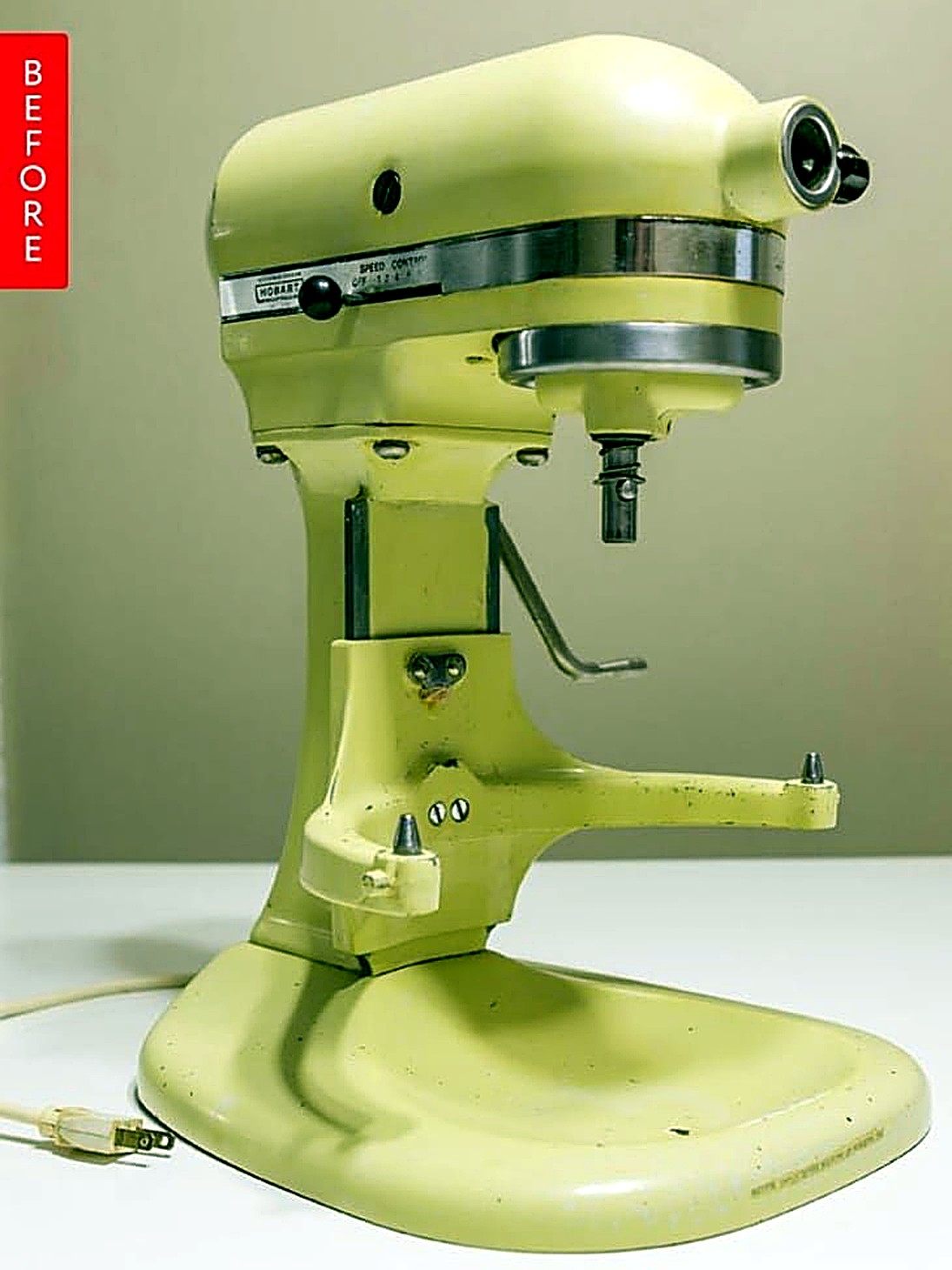
Color, the K45, and a new owner
Mixer production stopped during World War II and resumed in Greenville, Ohio, where KitchenAid mixers are still assembled today. In 1955, after decades of white-only, color arrived: Petal Pink, Sunny Yellow, Island Green, Satin Chrome, Antique Copper. In 1962 came the K45 — the most popular KitchenAid ever made, and the direct ancestor of today’s Classic tilt-heads.
In 1986, Whirlpool bought KitchenAid from Hobart for $150 million. Hobart went on with commercial equipment; KitchenAid became Whirlpool’s premium home brand. The mixer line kept evolving the same basic machine: the Professional 600 bowl-lift around 2000, the 5-quart Artisan in 2002 — the default home KitchenAid ever since — the 7-quart Pro Line, the little Artisan Mini in 2016, and a run of 100th-anniversary editions in 2019, a century after that battleship-tested design came home.
Why we tell you all this
Because it explains our whole business. A KitchenAid isn’t a disposable appliance with a sealed lifespan — it’s a century-old, gear-driven design that was built to be serviced. Gears wear, grease dries out, speed controls drift — and all of it is fixable, on machines from 1941 and 2024 alike. That’s worth $70 and a pickup before it’s worth a landfill and a $400 replacement.